
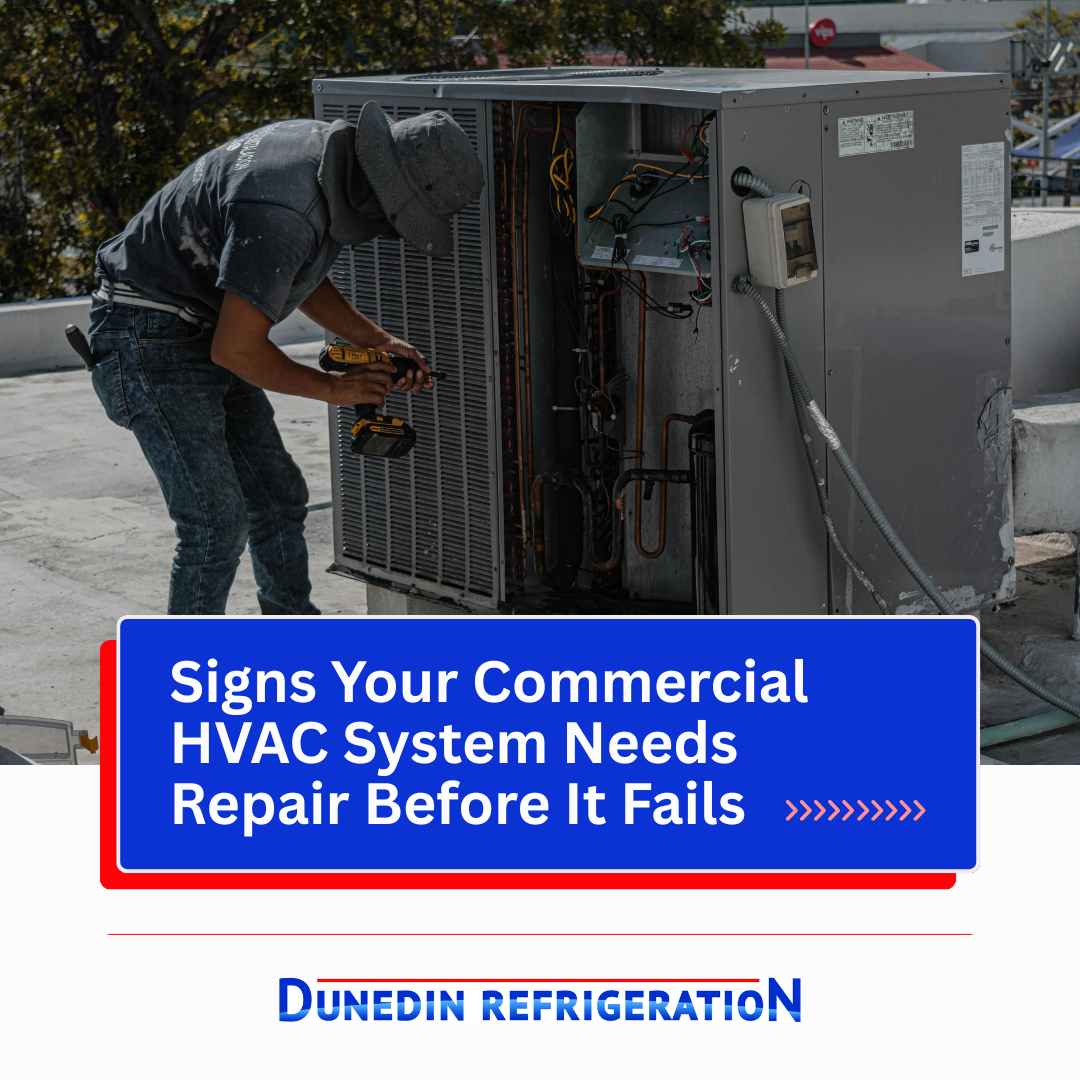
A commercial HVAC breakdown can create serious problems for any business or building. It can disrupt daily operations, make employees and customers uncomfortable, increase tenant complaints, damage indoor air quality, and lead to costly emergency service. For building managers and business owners, the best time to handle HVAC problems is before the system fails completely.
Most systems show warning signs before a major breakdown. The key is knowing what to watch for and scheduling commercial HVAC repair early. Whether your building relies on packaged units, split systems, heat pumps, or rooftop units, small issues can quickly turn into larger repairs if they are ignored.
So, what are the warning signs of commercial HVAC failure? Common signs include uneven temperatures, weak airflow, unusual noises, strange odors, rising energy bills, frequent cycling, water leaks, poor humidity control, thermostat problems, and repeated occupant complaints. If your system includes rooftop equipment, these issues may also point to the need for professional rooftop HVAC repair.
Below are the most common warning signs your commercial HVAC system needs repair before it fails.
Why Early Commercial HVAC Repair Matters
Commercial HVAC systems often work harder than residential systems. They may serve offices, retail spaces, restaurants, medical facilities, warehouses, multi-tenant buildings, schools, or industrial spaces. Many systems run for long hours and must support different zones, ventilation needs, occupancy levels, and equipment loads.
When one component begins to fail, the rest of the system may have to work harder. That extra strain can increase energy use, shorten equipment life, and lead to sudden breakdowns.
Early commercial HVAC repair can help:
- Prevent emergency system failures
- Reduce business disruptions
- Improve comfort for employees, tenants, and customers
- Lower energy waste
- Protect expensive equipment
- Improve indoor air quality
- Extend system lifespan
- Reduce long-term repair costs
- Help building managers plan ahead
Waiting until the system stops working completely usually means higher costs, longer downtime, and more stress.
1. Uneven Temperatures Throughout the Building
One of the first signs of commercial HVAC trouble is uneven temperature control. Some areas may feel too warm while others feel too cold. Employees may bring space heaters or fans, tenants may complain about comfort, or customers may avoid certain areas of the building.
Uneven temperatures may be caused by:
- Failing rooftop units
- Dirty coils
- Poor airflow
- Duct leaks
- Damaged dampers
- Thermostat or sensor issues
- Incorrect zoning
- Low refrigerant
- Aging HVAC equipment
If uneven temperatures continue after basic thermostat adjustments, it is time to schedule commercial HVAC repair. A technician can inspect airflow, controls, ductwork, and equipment performance to find the cause.
2. Weak or Reduced Airflow
Weak airflow is another major warning sign. If little air is coming from supply vents, your system may not be moving enough conditioned air through the building.
Reduced airflow may come from:
- Dirty or clogged filters
- Failing blower motors
- Worn belts
- Blocked ductwork
- Dirty evaporator coils
- Closed or damaged dampers
- Poor fan operation
- Duct leaks or disconnected duct sections
Poor airflow can make your system run longer, waste energy, and increase wear on motors and compressors. In commercial buildings, weak airflow can also affect indoor air quality and ventilation. Prompt repair can help prevent further damage.
3. Unusual Noises From HVAC Equipment
Commercial HVAC equipment should not be silent, but loud or unusual noises should never be ignored. Sounds from rooftop units, mechanical rooms, vents, or ductwork may indicate loose, worn, or failing parts.
Listen for noises such as:
- Grinding
- Banging
- Rattling
- Screeching
- Buzzing
- Humming
- Clicking
- Whistling
- Metal-on-metal sounds
A rattling noise may indicate loose panels or hardware. Screeching may point to a belt or motor problem. Buzzing can signal electrical issues. Banging or grinding may indicate a more serious mechanical failure.
If your building has rooftop units, unusual noises may be harder to notice from inside. That is why regular inspections and rooftop HVAC repair are important before small issues become major equipment failures.
4. Strange Odors When the System Runs
Unusual smells from vents or equipment areas can signal HVAC problems that need attention.
Common odor concerns include:
- Musty smells from moisture, mold, or dirty coils
- Burning odors from overheating electrical components
- Gas-like smells from fuel-related issues
- Chemical odors from refrigerant concerns
- Stale odors from poor ventilation
- Dirty sock smell from bacteria or moisture buildup
If occupants notice recurring smells when the HVAC system starts, do not ignore them. Odors may point to drainage problems, microbial growth, electrical issues, ventilation concerns, or equipment damage.
If there is a strong gas smell, leave the area and contact the gas provider or emergency services immediately before calling an HVAC company.
5. Rising Energy Bills Without a Clear Reason
A commercial HVAC system can be one of the largest energy users in a building. If utility bills are increasing but occupancy, operating hours, and weather patterns have not changed significantly, your HVAC system may be wasting energy.
Higher energy costs may be caused by:
- Dirty coils
- Clogged filters
- Low refrigerant
- Failing motors
- Leaky ducts
- Poor controls
- Short cycling
- Aging equipment
- Rooftop unit problems
- Lack of maintenance
A professional inspection can identify whether the system needs cleaning, adjustment, repair, or replacement planning. Addressing energy waste early can help protect your operating budget.
6. Frequent Cycling or Constant Running
Your commercial HVAC system should run in steady, efficient cycles. If it turns on and off too frequently or runs constantly without reaching the desired temperature, something is wrong.
Frequent cycling may indicate:
- Thermostat or sensor problems
- Dirty filters
- Low refrigerant
- Oversized equipment
- Electrical issues
- Compressor problems
- Poor airflow
- Control board issues
Constant running may indicate:
- Undersized equipment
- Dirty coils
- Duct leaks
- Low refrigerant
- Failing components
- Heavy building load
- Poor insulation or air sealing
Both short cycling and constant operation place extra strain on the system and can lead to premature failure.
7. Water Leaks or Moisture Around Equipment
Water near HVAC equipment should be inspected quickly. Commercial systems remove moisture from the air, especially during cooling season. That moisture should drain safely through condensate drain lines and pans.
Leaks may be caused by:
- Clogged condensate drains
- Cracked drain pans
- Frozen coils
- Poor drainage
- Dirty coils
- Improper installation
- High humidity problems
- Rooftop unit drainage issues
Water leaks can damage ceilings, walls, flooring, inventory, and equipment. In rooftop systems, drainage problems can also affect roofing materials or cause hidden water intrusion. Schedule service quickly if you notice moisture around equipment or ceiling stains below rooftop units.
8. Poor Indoor Air Quality or Humidity Problems
Your HVAC system does more than control temperature. It also supports ventilation, filtration, and humidity control. If indoor air feels stuffy, dusty, humid, or stale, the system may not be operating correctly.
Signs of indoor air quality problems include:
- Excessive dust
- Musty odors
- High humidity
- Dry air
- Occupant allergy complaints
- Poor ventilation
- Condensation
- Stale air in certain areas
Commercial HVAC repair may involve filter replacement, airflow adjustments, coil cleaning, drain service, ventilation checks, or humidity control solutions.
9. Thermostat or Building Control Problems
Many commercial buildings use thermostats, sensors, zoning controls, or building automation systems. When controls are inaccurate or malfunctioning, the HVAC equipment may run at the wrong times, overcondition certain zones, or fail to respond properly.
Control problems may show up as:
- Incorrect temperature readings
- Zones not responding
- Equipment running after hours
- Frequent thermostat adjustments
- Inconsistent comfort
- System not turning on or off properly
- Unexpected alarms or error codes
A technician can test controls, sensors, wiring, and communication between the thermostat or automation system and HVAC equipment.
10. Rooftop HVAC Units Show Visible Wear or Damage
Many commercial buildings use rooftop HVAC units because they save indoor space and support larger building needs. However, rooftop units are exposed to sun, rain, wind, debris, temperature swings, and weather-related wear.
Signs you may need rooftop HVAC repair include:
- Damaged panels
- Loose access doors
- Rust or corrosion
- Debris around the unit
- Unusual vibration
- Poor drainage
- Damaged electrical connections
- Fan or motor issues
- Reduced heating or cooling performance
- Water stains inside the building below the unit
Because rooftop units are not always visible during daily operations, building managers should schedule regular inspections to catch problems early.
11. More Complaints From Employees, Tenants, or Customers
Occupant complaints are often one of the first signs of HVAC trouble. If people in the building are frequently reporting discomfort, odors, poor airflow, or temperature swings, the system should be inspected.
Watch for repeated comments such as:
- “This room is always too hot.”
- “The air feels stuffy.”
- “There is barely any air coming from the vent.”
- “It smells musty when the AC turns on.”
- “The temperature keeps changing.”
- “The unit is making noise.”
A pattern of complaints usually means there is an underlying issue that needs professional attention.
What Building Managers Should Check Before Calling
Before scheduling service, building managers can perform a few basic checks:
- Confirm thermostat settings and schedules.
- Check whether filters are dirty.
- Make sure vents are open and unblocked.
- Review recent utility bills.
- Look for visible leaks or ceiling stains.
- Listen for unusual noises.
- Ask whether complaints are coming from one zone or the entire building.
- Check whether the issue happens at certain times of day.
These checks can help your HVAC technician diagnose the problem faster.
FAQ: Commercial HVAC Failure Warning Signs
1. What are the warning signs of commercial HVAC failure?
Warning signs of commercial HVAC failure include uneven temperatures, weak airflow, unusual noises, strange odors, rising energy bills, frequent cycling, constant running, water leaks, poor humidity control, thermostat problems, and repeated occupant complaints.
2. When should I call for commercial HVAC repair?
You should call for commercial HVAC repair as soon as you notice performance problems, comfort complaints, high energy bills, leaks, odors, noises, or system cycling issues. Early repair can prevent bigger failures and reduce business disruption.
3. Do rooftop HVAC units need special repair service?
Yes, rooftop HVAC units require trained commercial HVAC technicians because they are exposed to weather, use specialized components, and often serve large building areas. Rooftop HVAC repair may involve fans, motors, coils, compressors, electrical parts, drainage, controls, and weather-damaged components.
Schedule Commercial HVAC Repair Before Your System Fails
If your commercial HVAC system is showing warning signs, do not wait for a full breakdown. Early repair can protect your building, reduce energy waste, improve comfort, and help prevent costly emergency service.
Our local commercial HVAC team provides professional diagnostics, rooftop HVAC repair, preventive maintenance, and reliable repair solutions for offices, retail spaces, restaurants, medical facilities, warehouses, and multi-tenant buildings.
We will inspect your equipment, identify the problem, explain your options clearly, and recommend the right solution for your property and budget. Contact our commercial HVAC repair experts today to schedule service before a small issue becomes a major failure.