
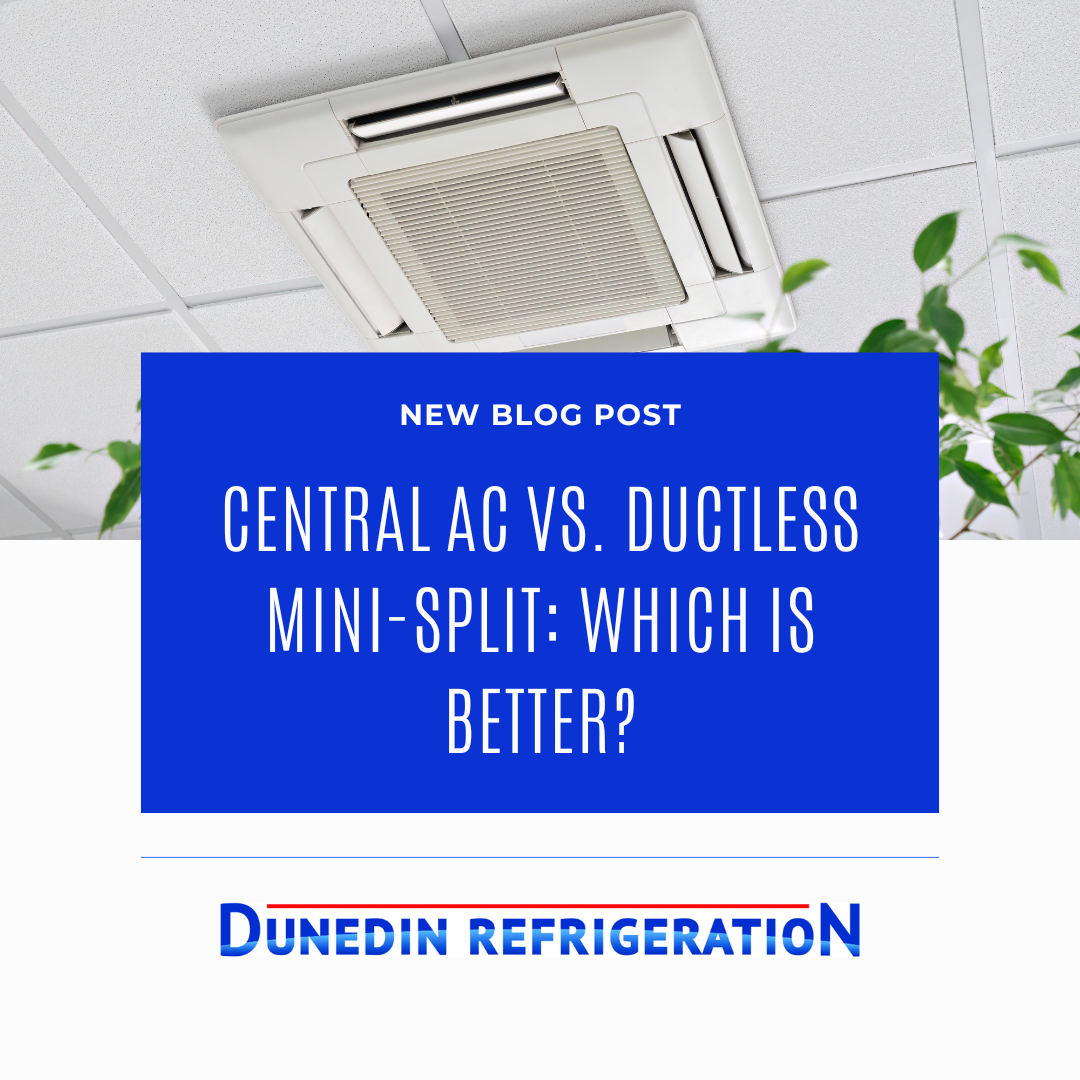
If you are planning to upgrade your cooling system, you may be comparing a ductless mini split with traditional central AC. Both systems can keep your home comfortable, but they work differently, cost differently, and may be better suited for different types of homes.
So, is a ductless mini-split better than central air? The answer depends on your home’s layout, whether you already have ductwork, your comfort goals, your budget, and how much control you want over individual rooms. A ductless mini split may be better for homes without existing ducts, room additions, garages, offices, and zoned comfort. Central AC may be better for whole-home cooling when ductwork is already in good condition.
Before choosing one system over the other, it helps to understand how each option works, where each performs best, and what factors matter most for long-term comfort and efficiency.
What Is Central AC?
Central AC is a whole-home cooling system that uses an outdoor condenser, an indoor air handler or furnace blower, refrigerant lines, and ductwork to distribute cool air throughout the home. The thermostat controls the system, and cooled air travels through supply ducts into different rooms.
Central AC is one of the most common cooling systems in homes with existing ductwork. It can cool the entire house from one system and is often paired with a furnace or heat pump.
Central AC may be a good choice if:
- Your home already has properly sized ductwork.
- You want whole-home cooling from one system.
- You prefer hidden indoor equipment.
- Your current central system is being replaced.
- You want one thermostat to control the main living space.
- Your ductwork is clean, sealed, and in good condition.
For many homeowners, central AC is familiar, effective, and convenient. However, its performance depends heavily on the condition of the duct system.
What Is a Ductless Mini Split?
A ductless mini split is a heating and cooling system that does not require traditional ductwork. It typically includes an outdoor compressor and one or more indoor air handlers mounted on the wall, ceiling, or floor. Each indoor unit serves a specific room or zone.
Ductless systems are popular for homes without ducts, older properties, additions, converted garages, sunrooms, workshops, guest suites, and rooms that never seem comfortable with the existing HVAC system.
A ductless mini split may be a good choice if:
- Your home does not have ductwork.
- You want room-by-room temperature control.
- You are adding comfort to a single space.
- You want to avoid duct installation.
- You have hot or cold spots.
- You want efficient zoned heating and cooling.
- You need a flexible solution for a home office, garage, or addition.
Many ductless mini splits also provide both cooling and heating, making them useful for year-round comfort in many climates.
Central AC vs. Ductless Mini-Split: Key Differences
Both central AC and ductless systems can cool your home, but they do it in different ways. The right choice depends on your property and how you use your space.
1. Ductwork Requirements
The biggest difference is ductwork. Central AC relies on ducts to move cool air throughout your home. If your ducts are damaged, leaky, dirty, poorly designed, or missing, central AC may be more expensive or less efficient.
A ductless mini split does not use ducts. This makes it ideal for older homes, additions, detached spaces, or areas where installing ductwork would be difficult or costly.
If your home already has good ductwork, central AC may be straightforward. If not, ductless may be the simpler option.
2. Energy Efficiency
Ductless mini splits are often very efficient because they avoid energy losses that can happen through ductwork. In many homes, duct leaks or poor insulation can waste cooled air before it reaches the rooms.
Ductless systems also allow you to cool only the rooms you are using. This can support lower energy use, especially if some areas of the home are rarely occupied.
Central AC can also be efficient, especially when paired with properly sealed ducts, the right system size, and regular maintenance. However, if the ductwork is in poor condition, energy efficiency may suffer.
3. Comfort and Temperature Control
Central AC typically cools the entire home based on one thermostat or a limited zoning setup. This works well in homes with balanced airflow and good duct design. However, some rooms may still feel warmer or cooler than others.
A ductless mini split gives you more direct control over individual rooms or zones. Each indoor unit can usually be set to a different temperature. This is helpful for families with different comfort preferences or rooms that are used at different times of day.
If you want room-by-room control, ductless often has the advantage.
4. Installation Process
Central AC installation may be simple if you already have usable ductwork and are replacing an existing system. However, if your home does not have ducts, adding them can be more invasive and expensive.
Ductless installation is usually less invasive because it only requires a small opening for refrigerant lines, electrical wiring, and drainage. Indoor units can be mounted in specific rooms without major remodeling.
For additions, garages, and older homes, ductless installation is often faster and more flexible.
5. Appearance
Central AC is mostly hidden. Cool air comes through vents, and the main indoor equipment is usually in a closet, attic, basement, or utility space. Many homeowners prefer this because there are no visible indoor units on the wall.
A ductless mini split has visible indoor air handlers. Modern units are designed to look clean and compact, but they are still noticeable. Some homeowners do not mind this, while others prefer the hidden look of central AC.
6. Cost Considerations
The cost of central AC versus ductless mini split installation depends on your home and system needs.
Central AC may be more cost-effective if:
- You already have good ductwork.
- You are replacing an existing central system.
- You want one system for the whole home.
- Your home has a simple layout.
Ductless may be more cost-effective if:
- Your home has no ductwork.
- You only need to condition one or a few rooms.
- Installing ducts would require major construction.
- You want zoned comfort without a full duct system.
A whole-home ductless system with multiple indoor units can cost more than a single central AC system, but it may offer better zoning and efficiency in the right home.
Pros and Cons of Central AC
Central AC can be an excellent choice for many homes, especially when ductwork is already in place.
Pros of central AC:
- Provides whole-home cooling
- Indoor equipment is mostly hidden
- Works well with existing ductwork
- Familiar system for many homeowners
- Can pair with furnace systems
- Uses standard vents and registers
- Good option for larger homes with balanced ducts
Cons of central AC:
- Requires ductwork
- Duct leaks can waste energy
- Less room-by-room control
- Can create uneven temperatures if ducts are poorly designed
- May be costly to install in homes without ducts
- Usually cools the whole home, even unused rooms
Pros and Cons of a Ductless Mini Split
A ductless mini split is a flexible and efficient option, but it is not the perfect fit for every situation.
Pros of a ductless mini split:
- No ductwork required
- Excellent for additions and older homes
- Room-by-room temperature control
- Can improve comfort in problem areas
- Often very energy efficient
- Flexible installation options
- Many models provide heating and cooling
- Helps avoid duct energy loss
Cons of a ductless mini split:
- Indoor units are visible
- Multiple rooms may require multiple air handlers
- Upfront cost can increase with several zones
- Filters still need regular cleaning
- Placement matters for comfort and appearance
- Not always ideal if you prefer one hidden whole-home system
Which System Is Better for Your Home?
A ductless mini split may be better than central air if your home does not have ductwork, if you want zoned comfort, or if you need to heat and cool specific rooms. Central AC may be better if your home already has good ductwork and you want a clean, whole-home cooling system with less visible indoor equipment.
Choose central AC if:
- You already have well-designed ducts.
- You want consistent whole-home cooling.
- You prefer hidden indoor equipment.
- You are replacing an existing central system.
- Your home has balanced airflow.
Choose a ductless mini split if:
- Your home has no ducts.
- You are cooling an addition, garage, or office.
- You want separate temperature control in different rooms.
- Your current system leaves hot or cold spots.
- You want a flexible, efficient installation option.
The best way to decide is to schedule a professional HVAC evaluation. A local technician can inspect your home, review your ductwork, discuss your comfort goals, and recommend the right system.
FAQ: Ductless Mini Split vs. Central AC
1. Is a ductless mini-split better than central air?
A ductless mini-split may be better than central air for homes without ductwork, room additions, garages, home offices, and zoned comfort needs. Central AC may be better for whole-home cooling when existing ductwork is in good condition.
2. Is central AC cheaper than a ductless mini split?
Central AC may be cheaper if your home already has good ductwork and you are replacing an existing system. A ductless mini split may be more affordable if you only need to cool one or two rooms or if installing ductwork would be expensive.
3. Can a ductless mini split cool a whole house?
Yes, a ductless mini split can cool a whole house if it is designed with the right number of indoor units and proper system capacity. A professional HVAC contractor can calculate the load and recommend the correct setup for whole-home comfort.
Schedule a Local HVAC Consultation Today
Choosing between a ductless mini split and central AC is an important decision. The right system can improve comfort, reduce energy waste, and provide reliable cooling for years. The wrong system can lead to high energy bills, uneven temperatures, and unnecessary frustration.
Our local HVAC team can help you compare your options with confidence. We will inspect your home, evaluate your ductwork, discuss your comfort goals, and recommend the best heating and cooling solution for your space and budget.
Whether you need a ductless mini split installation, central AC replacement, or expert guidance on the best system for your home, we are here to help. Contact our HVAC company today to schedule your local consultation and find the right comfort solution for your home.