
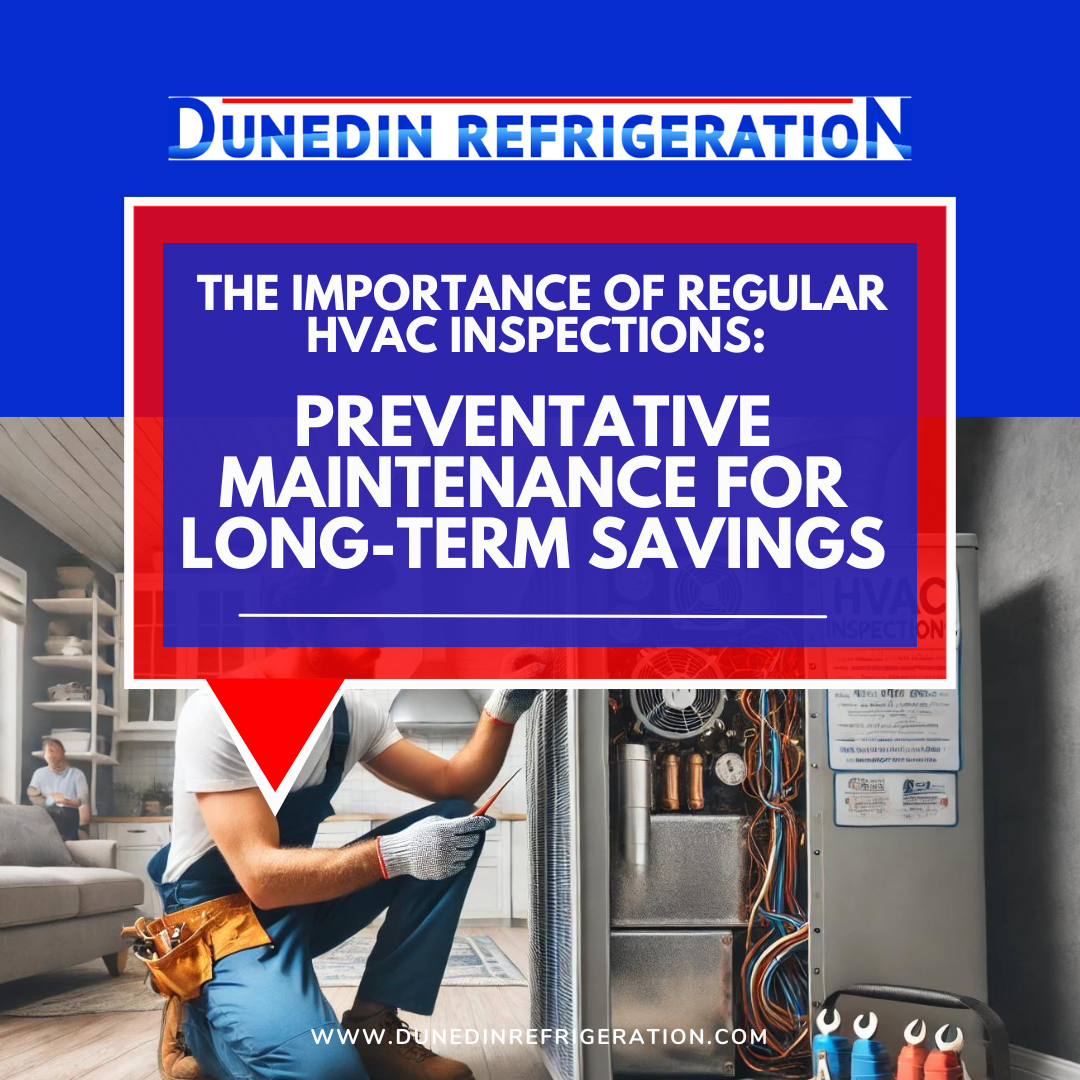
When it comes to maintaining a comfortable and healthy indoor environment, your HVAC (Heating, Ventilation, and Air Conditioning) system plays a crucial role. However, like any other mechanical system, your HVAC system requires regular inspections and maintenance to ensure it operates efficiently and reliably. At Dunedin Refrigeration, we understand the importance of regular HVAC inspections and the long-term savings they can bring to homeowners and businesses alike. In this blog, we’ll explore the benefits of regular HVAC inspections and how preventative maintenance can save you money in the long run.
Why Regular HVAC Inspections Matter
1. Enhanced Energy Efficiency
One of the primary reasons for scheduling regular HVAC inspections is to improve the energy efficiency of your system. Over time, dust, dirt, and debris can accumulate in your HVAC system, causing it to work harder to maintain the desired temperature. This not only increases energy consumption but also leads to higher utility bills. During an inspection, a professional technician will clean and tune your system, ensuring it runs smoothly and efficiently.
2. Prolonged System Lifespan
Your HVAC system is a significant investment, and you want it to last as long as possible. Regular inspections help identify and address minor issues before they escalate into major problems. By catching and fixing issues early, you can prevent costly repairs and extend the lifespan of your system. At Dunedin Refrigeration, we recommend scheduling inspections at least twice a year to keep your HVAC system in top shape.
3. Improved Indoor Air Quality
Indoor air quality is essential for your health and well-being. A poorly maintained HVAC system can circulate dust, pollen, mold, and other contaminants throughout your home or business. This can lead to respiratory issues, allergies, and other health problems. Regular HVAC inspections include cleaning or replacing air filters and checking for any signs of mold or mildew, ensuring that the air you breathe is clean and healthy.
4. Reduced Risk of Breakdowns
There’s never a convenient time for your HVAC system to break down, especially during extreme weather conditions. Regular inspections help identify worn-out or faulty components that could cause your system to fail when you need it most. By addressing these issues proactively, you can reduce the risk of unexpected breakdowns and ensure your system operates reliably year-round.
The Financial Benefits of Preventative Maintenance
1. Lower Energy Bills
As mentioned earlier, a well-maintained HVAC system operates more efficiently, which translates to lower energy bills. According to the U.S. Department of Energy, regular maintenance can improve your system’s efficiency by up to 15%. Over time, these savings can add up significantly, offsetting the cost of regular inspections.
2. Avoiding Costly Repairs
Preventative maintenance helps catch small issues before they become major problems. For example, a simple refrigerant leak can be repaired quickly and inexpensively during an inspection. However, if left unchecked, it can lead to compressor failure, which is a much more costly repair. By investing in regular inspections, you can avoid these expensive repairs and keep your HVAC system running smoothly.
3. Extending System Lifespan
Replacing an HVAC system is a significant expense. By performing regular inspections and maintenance, you can extend the lifespan of your system by several years. This means you won’t have to invest in a new system as frequently, saving you thousands of dollars in the long run.
4. Maintaining Warranty Coverage
Many HVAC manufacturers require regular maintenance as a condition of their warranty. Failing to schedule inspections and perform necessary maintenance can void your warranty, leaving you responsible for the full cost of any repairs or replacements. By keeping up with regular inspections, you can ensure your warranty remains valid and protect yourself from unexpected expenses.
What to Expect During an HVAC Inspection
During a regular HVAC inspection, a professional technician from Dunedin Refrigeration will perform a thorough examination of your system. Here are some of the key tasks included in a typical inspection:
1. Checking and Replacing Air Filters
Clean air filters are essential for maintaining good indoor air quality and system efficiency. The technician will check the condition of your filters and replace them if necessary.
2. Cleaning Coils and Components
Dust and debris can accumulate on the coils and other components of your HVAC system, reducing efficiency and potentially causing damage. The technician will clean these parts to ensure optimal performance.
3. Inspecting Electrical Connections
Loose or faulty electrical connections can be dangerous and cause your system to malfunction. The technician will inspect and tighten any connections as needed.
4. Lubricating Moving Parts
Proper lubrication reduces friction and wear on the moving parts of your HVAC system. The technician will lubricate these parts to prevent damage and extend the lifespan of your system.
5. Checking Refrigerant Levels
Low refrigerant levels can cause your system to work harder and reduce its efficiency. The technician will check the refrigerant levels and top them off if necessary.
6. Testing Thermostat Functionality
A malfunctioning thermostat can lead to inconsistent temperatures and increased energy consumption. The technician will test your thermostat and calibrate it if needed to ensure accurate temperature control.
Conclusion
Regular HVAC inspections are essential for maintaining the efficiency, reliability, and longevity of your system. By investing in preventative maintenance, you can enjoy lower energy bills, avoid costly repairs, and ensure a comfortable and healthy indoor environment. At Dunedin Refrigeration, we are committed to providing top-notch HVAC inspection and maintenance services to help you get the most out of your system. Contact us today to schedule your next inspection and experience the benefits of a well-maintained HVAC system.